The Neurobiology of Dopamine and Short-Form Video Engagement: Psychological, Developmental, and Strategic Implications
Introduction
The contemporary digital landscape is increasingly dominated by the pervasive influence of short-form video content. Platforms offering rapidly digestible visual and auditory stimuli have become a ubiquitous feature of daily life, profoundly shaping how individuals consume information, interact socially, and experience entertainment. This widespread adoption, however, raises significant questions regarding its impact on human cognition, behavior, and well-being. At the heart of this phenomenon lies the neurobiological mechanism of dopamine, a key neurotransmitter in the brain's reward system, which is intricately linked to motivation, learning, and the reinforcement of behaviors. The design of short-form video content, characterized by its variable reward schedules and constant novelty, appears particularly adept at triggering dopamine release, creating a powerful feedback loop that can foster deep engagement and, in some instances, problematic usage patterns. Understanding this interplay between digital design and neurobiology is therefore paramount to addressing the multifaceted challenges presented by this evolving media environment.
This research endeavors to address critical gaps in our understanding of the consequences stemming from the widespread and often intensive engagement with short-form video content. While the addictive potential of digital media is a recognized concern, the specific neurobiological pathways activated by short-form video, and their subsequent psychological and developmental ramifications, warrant deeper investigation. Existing research often examines digital media in broader terms, failing to fully capture the unique characteristics of short-form video and its distinct impact on reward pathways and cognitive functions. This report aims to delineate the neurobiological underpinnings of dopamine's role in short-form video engagement, analyze the resultant psychological and behavioral impacts, and explore the developmental and educational implications, particularly for younger, more impressionable demographics. By focusing on these interconnected dimensions, this study seeks to provide a comprehensive and nuanced perspective on a pressing societal issue.
The scope of this research is structured to systematically explore the complex relationship between short-form video consumption and human well-being. It begins by establishing the foundational neurobiological principles of dopamine and its interaction with digital stimuli, providing a critical lens through which to understand subsequent effects. Following this, the report delves into the psychological and behavioral sequelae, examining the evidence linking excessive consumption to mental health challenges such as anxiety and attention deficits. The analysis then extends to the developmental and educational ramifications, specifically considering the impact on the formative years of children and adolescents. Finally, the research synthesizes these findings to propose strategies for fostering more balanced and healthy digital engagement, aiming to mitigate negative consequences and promote overall well-being across diverse age groups.
To facilitate a clear and logical progression of inquiry, this report is organized into four distinct sections. The initial section lays the groundwork by exploring the neurobiological mechanisms of dopamine and its engagement with short-form video content. The subsequent section critically examines the psychological and behavioral impacts associated with excessive consumption. The third section then focuses on the specific developmental and educational implications for younger generations. The concluding section synthesizes the insights gleaned from these investigations to offer a comprehensive outlook and propose actionable strategies for balanced digital engagement. This structured approach is designed to guide the reader through a thorough examination of the topic, culminating in a set of evidence-based recommendations.
1. Neurobiological Underpinnings of Dopamine and Short-Form Video Engagement
Dopamine, a critical neuromodulator, serves as the central currency of the brain's reward system, profoundly influencing motivation, learning, and pleasure. Its intricate role in signaling the salience of stimuli and reinforcing behaviors that lead to rewarding outcomes makes it a key player in understanding human engagement with various activities, including the increasingly pervasive consumption of short-form video content. This section delves into the fundamental neurobiological functions of dopamine, elucidating its mechanisms within the mesolimbic pathway and its sensitivity to reward prediction errors and variable reward schedules. Subsequently, it will explore how the design and consumption patterns of short-form video platforms are intricately linked to dopamine release, potentially fostering habit formation and altering established reward pathways. A thorough comprehension of these neurobiological foundations is indispensable for appreciating the subsequent psychological and developmental ramifications of excessive engagement with such digital media.
1.1 The Role of Dopamine in Reward, Motivation, and Learning
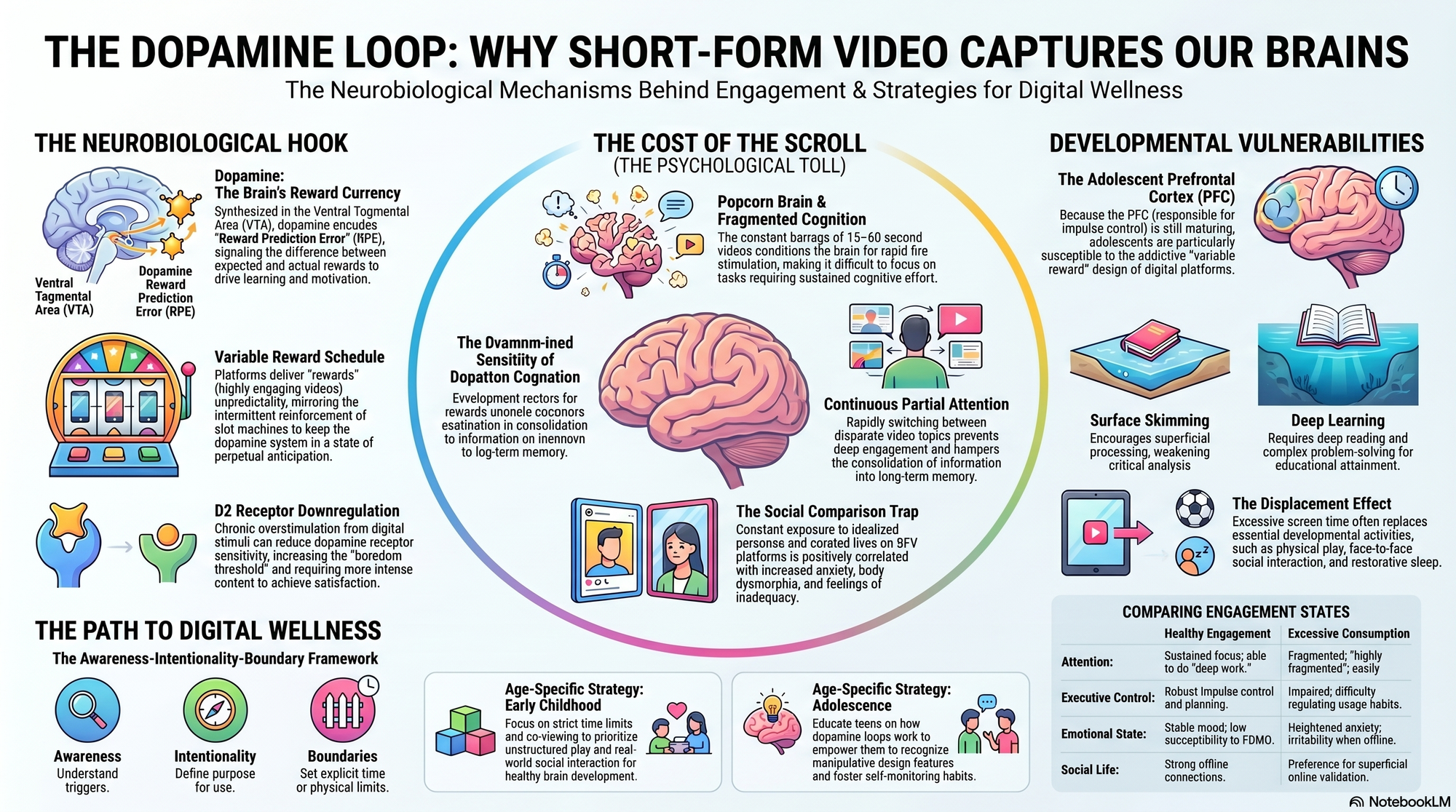
Dopamine is synthesized primarily in the ventral tegmental area (VTA) and the substantia nigra, with its projections extending to key brain regions that constitute the mesolimbic pathway. This pathway, crucially involving the nucleus accumbens (NAcc) and the prefrontal cortex (PFC), is fundamental to processing rewarding stimuli, driving goal-directed behavior, and facilitating associative learning. Dopamine's function is not merely to signal pleasure but rather to encode 'reward prediction error' (RPE), a concept that elucidates how the brain learns from outcomes that deviate from expectations [1].
When an organism encounters a stimulus or performs an action that leads to an outcome, dopamine neurons in the VTA fire. The pattern of this firing encodes the difference between the expected reward and the actual reward received. If a reward is better than anticipated, dopamine firing increases, signaling a positive RPE, which strengthens the association between the preceding cues or behaviors and the rewarding outcome. Conversely, if the reward is as expected, dopamine firing returns to baseline, indicating no new learning. If the reward is less than expected or absent, dopamine firing decreases below baseline, signaling a negative RPE, which weakens the learned associations [1]. This RPE signal is a powerful learning mechanism, guiding behavior towards actions that are likely to yield positive outcomes and away from those that are disappointing.
The efficacy of dopamine in driving behavior is particularly amplified under conditions of variable reward schedules and intermittent reinforcement. Unlike continuous reinforcement, where a reward is delivered after every instance of a behavior, variable schedules deliver rewards unpredicthetically. This unpredictability can be based on time (variable interval) or the number of responses (variable ratio). In the context of dopamine, intermittent reinforcement leads to more sustained and robust dopamine release compared to continuous reinforcement. The uncertainty inherent in variable schedules keeps the dopamine system highly engaged, as the organism constantly anticipates the next potential reward. This anticipation, driven by the persistent RPE signal, leads to increased motivation, persistence, and the formation of strong behavioral habits, even in the face of numerous unrewarded trials [1]. This phenomenon is a cornerstone in understanding why certain activities, particularly those with an element of chance or unpredictability, can become highly compelling and potentially addictive.
Methodologies employed to study dopamine release and its functions are diverse. Direct measurement techniques, such as microdialysis, allow for the quantification of dopamine levels in specific brain regions, typically in animal models, offering high temporal and spatial resolution [1]. Electrophysiological recordings, including voltammetry, can capture the rapid firing patterns of dopamine neurons and the transient changes in dopamine concentration associated with specific events. Indirect measurement techniques, widely used in human research, include Positron Emission Tomography (PET) and Single-Photon Emission Computed Tomography (SPECT), which can assess dopamine receptor availability or transporter density, and functional Magnetic Resonance Imaging (fMRI), which measures blood-oxygen-level-dependent (BOLD) signals correlated with neural activity in dopamine-related circuits [2]. However, these indirect methods often lack the temporal resolution to capture the rapid phasic dopamine signals crucial for RPE signaling and are typically conducted in controlled laboratory settings that may not reflect naturalistic engagement [3]. Furthermore, behavioral paradigms that manipulate reward schedules, coupled with computational modeling based on reinforcement learning theory, are invaluable for inferring dopamine system dynamics from observable behavior [2]. Despite these advancements, significant limitations persist, including the ethical and practical challenges of directly measuring dopamine release in humans during complex, real-world activities like digital media consumption, and the difficulty in fully disentangling dopamine's role in 'wanting' (seeking behavior) versus 'liking' (pleasure) [2, 3].
1.2 Short-Form Video Design and Dopamine Release Mechanisms
Short-form video platforms, such as TikTok and Instagram Reels, are meticulously engineered to capture and retain user attention, leveraging sophisticated design features that exploit the neurobiological principles of dopamine-driven reward mechanisms. These platforms are not merely passive content distributors; they are dynamic environments designed to continuously engage the brain's reward circuitry, particularly through the application of intermittent reinforcement principles, often amplified by algorithmic curation [2].
The infinite scroll feature is a prime example. By presenting an unending stream of novel video content, it eliminates natural stopping cues, thereby removing a key behavioral checkpoint that might otherwise signal the end of a consumption session. Each swipe offers the potential for a highly rewarding video—one that is humorous, emotionally resonant, or particularly novel. This inherent unpredictability of encountering a highly engaging piece of content aligns directly with the principles of variable ratio reinforcement schedules, which are known to elicit strong and persistent behavioral responses [1, 2]. The dopamine system remains activated in anticipation of the next reward, driving continuous engagement as users 'chase' the next satisfying click [2].
Algorithmic content curation plays a pivotal role in optimizing this reward delivery. These algorithms learn user preferences through their interactions (likes, shares, watch time, skips) and dynamically personalize the content feed. This creates a highly tailored 'reward landscape' where users are consistently presented with content predicted to elicit a positive response. By refining its predictions based on user feedback, the algorithm effectively optimizes the delivery of rewarding stimuli, creating a feedback loop that reinforces dopamine pathways associated with specific content types or themes [3]. This process can be understood through the lens of reinforcement learning, where the algorithm acts as a sophisticated cue predicting rewarding content, thereby strengthening associations and driving continued engagement [3].
Notification systems function as potent external cues designed to draw users back to the platform. Even a simple notification, such as 'Someone you know posted a new video' or 'Trending now,' can trigger anticipatory dopamine release. The uncertainty regarding the actual reward value of the content behind the notification further enhances its effectiveness, leveraging the principles of variable reward [2]. This mechanism can tap into the 'fear of missing out' (FOMO), amplifying the urge to check the platform and engage with its content.
Furthermore, the inherent variability in content length and type on short-form video platforms contributes significantly to the intermittent reinforcement schedule. Users must often sift through a stream of content, some of which may be moderately engaging or uninteresting, to find the highly rewarding pieces. This constant search for novelty and satisfaction, coupled with the unpredictable delivery of highly engaging content, is a powerful driver of dopamine release and sustained attention [1, 2]. The brain remains in a state of heightened anticipation, seeking to resolve the uncertainty and obtain the next rewarding experience.
Methodologies for measuring dopamine response to digital stimuli are fraught with challenges. While microdialysis and electrophysiology can provide direct, high-resolution measurements of dopamine release, they are invasive and primarily limited to animal models, making their application to humans engaging with digital media in real-time infeasible [2]. fMRI and PET scans, while non-invasive, have limitations in temporal resolution, making it difficult to capture the rapid phasic dopamine signals associated with specific content features or rapid transitions within a video [2, 3]. They are better suited for observing broader patterns of brain activation in reward-related circuits. Consequently, researchers often rely on indirect behavioral correlates, such as pupil dilation or heart rate variability, and computational modeling to infer dopamine system dynamics from observed user behavior [2, 3]. Despite these efforts, directly quantifying the precise magnitude of dopamine release triggered by specific design elements of short-form video remains a significant methodological hurdle, with current understanding largely based on inferential evidence and theoretical frameworks [3].
1.3 Potential Neuroplastic Changes from Chronic Variable Reward Exposure
Chronic and intensive exposure to the dopamine-driven reward mechanisms inherent in short-form video platforms, characterized by variable reward schedules and intermittent reinforcement, is hypothesized to induce significant neuroplastic changes in the brain. These adaptations, often extrapolated from research on substance and behavioral addictions, suggest alterations in dopamine receptor density, the functioning of executive control networks, and the strengthening of habit-based neural circuits [1, 3].
One significant hypothesized change is the downregulation of D2 receptors in the striatum. In addiction models, chronic overstimulation of the mesolimbic dopamine pathway can lead to a reduction in the number or sensitivity of D2 receptors. This neuroadaptation can result in a blunted response to natural rewards, a diminished sense of pleasure from everyday activities, and a phenomenon known as 'anhedonia.' Consequently, individuals may require increasingly intense or novel stimuli to achieve the same level of reward, driving a cycle of escalating consumption and potentially leading to a dependence on the high-intensity rewards provided by digital media [3].
Alterations in Prefrontal Cortex (PFC) function are also a significant concern. The PFC is critical for executive functions such as attention, impulse control, decision-making, and working memory. The rapid, constantly shifting nature of short-form video content, which demands quick attention shifts and immediate gratification, may lead to changes in PFC connectivity and efficiency. This could manifest as impaired sustained attention, increased distractibility, and a diminished capacity for impulse control, making it harder for individuals to disengage from the platform or to focus on tasks that require prolonged cognitive effort and offer delayed gratification [3]. The brain may become 'trained' for rapid stimulus processing and reward acquisition, at the expense of deeper cognitive engagement.
Furthermore, chronic engagement with these platforms can lead to the strengthening of habit circuits within the basal ganglia, particularly the striatum. The consistent pattern of stimulus-response-reward, even when the reward is intermittent, can solidify stimulus-response-reward pathways, leading to more automatic and habitual consumption patterns. This can contribute to the experience of 'mindless scrolling,' where individuals find themselves engaging with the platform out of habit rather than conscious intent or active seeking of specific content [3]. These habit loops can become deeply ingrained, making it difficult to break the cycle of engagement.
Finally, the brain's reward pathways may undergo sensitization or desensitization. Initially, the novelty and intensity of short-form video content might lead to sensitization, where dopamine pathways become more responsive. However, with chronic, high-frequency exposure, the system may adapt through desensitization, requiring more stimulation to achieve a similar level of dopamine release. This dynamic interplay could explain why users might feel they need more content, or more intensely stimulating content, over time to achieve the same level of satisfaction [3].
It is crucial to acknowledge that the understanding of these long-term neuroplastic changes specifically attributable to chronic short-form video consumption is still evolving. Much of the current understanding is derived from research on established addictive behaviors, where similar principles of reward pathway dysregulation are observed [1, 3]. Longitudinal studies specifically tracking neuroplasticity in heavy users of these platforms are essential to confirm these hypotheses, elucidate the precise mechanisms, and understand the nuances of these adaptations across different age groups and individual vulnerabilities. The complex interplay between algorithmic design, individual neurobiology, and the resulting behavioral patterns underscores the need for continued research in this domain [3].
2. Psychological and Behavioral Impacts of Excessive Short-Form Video Consumption
The pervasive integration of short-form video (SFV) content into daily digital consumption patterns has profound implications for psychological well-being and behavioral regulation. Characterized by rapid content delivery, algorithmic curation, and variable reward schedules, SFV platforms are designed to maximize user engagement, often at the expense of sustained attention and emotional equilibrium. This section meticulously examines the psychological consequences stemming from constant scrolling and immersion in SFV, investigating the intricate links between such behaviors and the development of anxiety, attention deficits, and other mental health concerns. Furthermore, it undertakes a comparative analysis of the cognitive and emotional states of individuals exhibiting healthy engagement patterns versus those showing signs of detrimental effects from excessive consumption, thereby highlighting the observable differences in their psychological functioning and daily life behaviors.
2.1 Cognitive Sequelae: Attention Deficits and Fragmented Cognition
The fundamental design of short-form video platforms, with their rapid-fire content delivery—typically ranging from 15 to 60 seconds per video—is intrinsically linked to the erosion of sustained attention spans and the fragmentation of cognitive processes. This constant barrage of novel stimuli, each promising a potential dopamine reward, conditions the brain to anticipate and seek high-frequency gratification. This phenomenon has been colloquially termed 'popcorn brain,' a state where the brain's ability to focus on tasks requiring sustained attention and lower stimulation levels is significantly diminished [4]. Research suggests a strong correlation between high SFV usage and a decline in executive functions, particularly in the domain of top-down attentional control, which is crucial for goal-directed behavior and cognitive filtering [4]. The prefrontal cortex (PFC), the brain region primarily responsible for executive functions such as planning, decision-making, and inhibitory control, is particularly vulnerable to the effects of this constant stimulation. Chronic exposure to rapid, unpredictable content shifts may lead to 'top-down' attentional fatigue, where the PFC experiences reduced activation during tasks demanding prolonged concentration [6]. The brain's repeated engagement with the 'orienting response'—the automatic reaction to novel stimuli—in rapid succession can potentially lead to a downregulation of the neural circuits essential for maintaining focus and inhibiting distractions [6].
Moreover, the continuous switching between disparate topics and visual information imposes a significant cognitive load. This forces the brain into a state of 'continuous partial attention,' a mode of processing that prevents deep engagement with any single piece of information. Consequently, the consolidation of information into long-term memory, a process that requires focused attention and cognitive effort, is severely hampered [4]. The sheer volume and speed of SFV content can also contribute to a state of overstimulation, where the brain struggles to process and integrate information effectively. This cognitive overload can manifest as feelings of mental fatigue, difficulty in concentrating on complex tasks, and a general reduction in cognitive efficiency. The implications extend beyond mere distraction; they touch upon the very architecture of how individuals process information, learn, and engage with the world around them. The capacity for deep reading, critical analysis, and intricate problem-solving—skills that rely on sustained cognitive engagement—may be compromised in individuals heavily immersed in SFV consumption [4]. The theoretical concern of neural plasticity further exacerbates this issue, suggesting that the brain's synaptic architecture might adapt to this high-stimulation environment. This adaptation could involve a reduction in the efficiency of neural pathways associated with slow-paced, deep processing, effectively 'pruning' the capacity for sustained cognitive effort in favor of rapid, superficial pattern recognition [6]. This shift in neural processing priorities poses a significant challenge to educational attainment and professional productivity, where deep focus and analytical thinking are paramount.
2.2 Mental Health Outcomes: Anxiety, Social Comparison, and FOMO
The psychological landscape shaped by excessive short-form video consumption is increasingly characterized by heightened levels of anxiety, pervasive social comparison, and the persistent fear of missing out (FOMO). The algorithmic nature of SFV platforms, designed to deliver a continuous stream of content tailored to user preferences, creates a potent 'variable reward schedule' akin to that found in gambling mechanisms [4]. This creates a compelling dopamine loop, where the anticipation of the next rewarding piece of content drives compulsive engagement. When access to this content is restricted, users frequently report symptoms of anxiety, irritability, and restlessness, indicative of a behavioral addiction model and withdrawal-like responses [4]. This constant pursuit of fleeting dopamine hits can disrupt natural mood regulation, leading to a reliance on external digital stimuli for emotional regulation.
Furthermore, the curated and often idealized nature of content presented on SFV platforms significantly amplifies social comparison processes. Users are frequently exposed to meticulously crafted portrayals of others' lives, achievements, and physical appearances, which can foster feelings of inadequacy, envy, and diminished self-esteem [5]. Unlike longer-form content that may offer more nuanced perspectives, the sheer volume and rapid succession of SFV consumption intensify the frequency of these comparisons. This constant exposure to seemingly perfect lives is positively correlated with increased symptoms of anxiety and depressive affect, particularly among adolescent demographics who are often more susceptible to social pressures and identity formation challenges [5]. The visual nature of SFV content also contributes to body dysmorphia, as users are bombarded with idealized body types and beauty standards, leading to increased self-consciousness and dissatisfaction with their own appearance.
The 'infinite scroll' mechanism inherent in most SFV feeds is a powerful driver of FOMO. This design feature creates a perpetual psychological state where users fear that ceasing their engagement will result in missing out on crucial social information, trending topics, or cultural moments [5]. This fear compels users to remain constantly connected and engaged, reinforcing compulsive usage patterns and contributing to a sense of hypervigilance. This hypervigilance, characterized by a heightened state of alert and difficulty in relaxing, can manifest as increased physiological arousal, such as elevated heart rate and restlessness, further exacerbating anxiety symptoms [5]. The interplay between anxiety and SFV usage is often bidirectional: individuals experiencing higher baseline anxiety may turn to SFV as a maladaptive coping mechanism to distract themselves from negative emotions. However, this avoidance behavior, by neglecting real-world stressors and responsibilities, can ultimately worsen the underlying anxiety [6]. The constant influx of information, coupled with the pressure to maintain an online presence and avoid missing out, creates a stressful digital environment that can significantly undermine mental well-being.
2.3 Behavioral Manifestations: Comparison of Engagement Patterns
The differential impact of short-form video consumption is starkly evident when comparing the psychological and emotional states of individuals with healthy versus excessive engagement patterns. Those exhibiting healthy engagement typically maintain a balanced relationship with SFV content, utilizing it as a source of entertainment or information without allowing it to dominate their time or cognitive resources. These individuals generally demonstrate robust cognitive functioning, characterized by sustained attention, effective executive control, and the ability to engage in deep work or study without significant distraction [5]. Their emotional regulation is typically stable, with a lower susceptibility to anxiety, FOMO, and social comparison driven by digital media. Consequently, their daily lives are less likely to be disrupted by compulsive digital habits, and they tend to maintain strong real-world social connections and engage in a wider range of offline activities [5].
In contrast, individuals exhibiting signs of 'damage' from excessive SFV consumption often display a distinct set of observable differences in their psychological functioning and daily life behaviors. Cognitively, they frequently struggle with attention deficits, finding it difficult to concentrate on tasks that require prolonged focus, such as reading books, attending lectures, or completing work assignments [4, 5]. This fragmented cognition, often described as 'popcorn brain,' leads to increased distractibility and a reduced capacity for deep processing and information retention. Their executive functions may be impaired, affecting their ability to plan, organize, and regulate their behavior effectively [4]. Emotionally, these individuals are more prone to experiencing heightened anxiety, irritability, and mood swings. The constant pursuit of dopamine hits and the effects of social comparison can lead to feelings of dissatisfaction, emptiness, and a diminished sense of self-worth [5]. They may exhibit symptoms consistent with behavioral addiction, including withdrawal symptoms like restlessness and anxiety when unable to access SFV content [4].
Behaviorally, excessive SFV consumption is often linked to increased procrastination and decreased productivity in academic and professional settings [4]. Sleep hygiene is frequently compromised, with late-night usage disrupting circadian rhythms and leading to reduced sleep quality, which in turn exacerbates existing anxiety and attention deficits [4]. Socially, while SFV platforms can offer a sense of connection, excessive use can displace face-to-face interactions, potentially leading to diminished social skills and a preference for superficial online engagement over deeper, more meaningful relationships [5]. The constant exposure to curated online personas can also distort expectations of real-life relationships and social interactions. For instance, a student with excessive SFV habits might find themselves unable to focus on their studies, constantly interrupting their work to check their phone, leading to lower grades and increased stress. They might also experience heightened social anxiety after comparing themselves to influencers online, leading them to withdraw from social events. In contrast, an individual with healthy engagement might use SFV for short breaks, finding quick entertainment without it interfering with their academic performance, social life, or sleep patterns. The observable differences are profound, impacting not only cognitive abilities and emotional well-being but also the fundamental structure and quality of daily life and interpersonal relationships.
3. Developmental and Educational Implications for the Younger Generation
The formative years of childhood and adolescence represent a critical window for cognitive, social, and emotional development. During this period, the brain undergoes significant neuroplastic changes, making young individuals particularly susceptible to environmental influences. The pervasive integration of short-form video (SFV) and video gaming into the daily lives of children and adolescents necessitates a thorough examination of their impact on developing minds. This section delves into the multifaceted effects of these digital stimuli on cognitive development, learning capacity, and educational attainment, exploring both potential advantages and disadvantages. Understanding these implications is crucial for developing strategies that foster healthy digital engagement and mitigate potential harm.
3.1 Cognitive Development and Learning Capacity
The adolescent brain is a dynamic system characterized by ongoing maturation, particularly in the prefrontal cortex (PFC), which is responsible for executive functions such as planning, decision-making, impulse control, and working memory [9]. The rapid and often unpredictable nature of short-form video content, with its constant stream of novel stimuli and immediate gratification loops, can significantly interact with these developing neural pathways. On one hand, the rapid delivery of information in SFVs might foster a form of incidental learning, exposing adolescents to a broad range of topics and current events quickly. This can potentially broaden general knowledge and introduce novel concepts in an engaging format [7]. Similarly, educational SFVs or gamified learning platforms can leverage the inherent appeal of these formats to increase motivation and engagement with academic material [7].
However, the potential disadvantages are substantial and warrant significant concern. The constant barrage of short, rapidly changing content in SFVs may contribute to a decrease in sustained attention spans. The brain, particularly the developing adolescent brain, can become conditioned to expect immediate rewards and frequent novelty, making it challenging to engage with tasks that require prolonged focus, such as reading lengthy texts, completing complex assignments, or participating in in-depth classroom discussions [7]. This can be linked to the neurobiological impact on the PFC, where the development of inhibitory control and sustained attention pathways may be hampered if the brain is not adequately exercised through tasks demanding prolonged focus [9]. The reward mechanisms inherent in these platforms, driven by likes, shares, and continuous scrolling, can create a powerful feedback loop that prioritizes immediate gratification over effortful cognitive engagement [7, 9].
Video gaming, while often involving more structured engagement than SFV scrolling, also presents a dual-edged sword for cognitive development. Many games, particularly strategy, puzzle, and role-playing genres, can significantly enhance problem-solving skills, critical thinking, and cognitive flexibility. They often require players to plan, strategize, and adapt to changing circumstances, thereby exercising executive functions [7]. Games that involve navigation and spatial manipulation can also bolster visual-spatial reasoning abilities, which are valuable in STEM fields [7]. Furthermore, the demands of certain games, such as tracking multiple objectives or managing resources, can improve working memory capacity and cognitive control, aiding in the ability to maintain focus amidst distractions [7].
Conversely, excessive gaming, especially fast-paced action games, can also contribute to impulsivity and a preference for immediate rewards, mirroring some concerns associated with SFVs [7]. The intense engagement required by many games can also interfere with the crucial process of memory consolidation. Sleep disruption, a common consequence of late-night gaming, is particularly detrimental as sleep is vital for consolidating learned information into long-term memory [7]. Moreover, the immersive nature of gaming can lead to a displacement of time that could otherwise be allocated to activities essential for holistic cognitive and social development, such as homework, reading, physical activity, and face-to-face social interactions [7]. The neurobiological underpinnings of these effects are complex, involving the interplay between dopamine pathways, the maturation of the prefrontal cortex, and the hippocampus's role in memory formation. The constant demand for rapid reward-seeking in both SFVs and many games can potentially lead to down-regulation of dopamine receptors, requiring higher stimulation for satisfaction and potentially impacting motivation for less immediately rewarding tasks [9]. The challenge lies in discerning the specific content and usage patterns that promote cognitive enhancement versus those that may impede healthy development.
3.2 Educational Attainment and Academic Performance
The influence of short-form video and gaming on educational attainment and academic performance is a critical area of concern, given their widespread adoption among young people. The potential benefits, while often context-dependent, can be significant. When integrated thoughtfully, SFV-style content or gamified learning can enhance student engagement and motivation. For instance, concise, visually appealing educational videos can break down complex topics into digestible segments, making learning more accessible and enjoyable for students who struggle with traditional pedagogical methods [7]. Similarly, educational games can provide immersive, interactive environments that foster deeper understanding and retention of knowledge, particularly in subjects like mathematics, science, and history [7]. The development of problem-solving and critical thinking skills through gaming can also translate into improved academic performance, enabling students to approach complex academic challenges with greater efficacy [7]. Rapid information processing, honed through exposure to fast-paced digital content, might also offer an advantage in certain academic contexts requiring quick comprehension, though this is often at the expense of depth.
However, the pervasive nature of these digital media also poses significant detriments to sustained learning and overall academic success. The aforementioned impact on attention spans is a primary concern. Students who are accustomed to the rapid-fire stimulation of SFVs may find it increasingly difficult to concentrate during lectures, while reading textbooks, or while completing assignments that require sustained mental effort [7]. This deficit in sustained attention can lead to poorer academic achievement, reduced knowledge retention, and a general decline in the ability to engage deeply with academic material [7]. The tendency towards superficial processing, encouraged by the condensed nature of SFV content, can hinder the development of critical thinking and analytical skills, which are fundamental to higher education and complex problem-solving [7]. Instead of engaging in deep cognitive processing, students may adopt a strategy of skimming information, leading to a weaker grasp of concepts and reduced long-term memory encoding [7].
Furthermore, the displacement effect of excessive screen time on academic activities cannot be overstated. Time spent on SFVs and gaming often comes at the expense of dedicated study time, homework completion, and reading for pleasure or academic enrichment [7]. This reduction in focused academic engagement directly impacts learning capacity and the acquisition of knowledge, potentially leading to lower grades and reduced educational attainment. The reward pathways activated by these digital activities can also foster a preference for immediate gratification, making the delayed rewards of academic achievement seem less appealing. This can manifest as decreased motivation for schoolwork and a reluctance to engage in effortful learning [7]. The contrast between the instant feedback and high engagement of digital entertainment and the often slower, more effortful process of academic learning can create a significant motivational gap for many young learners.
3.3 Methodological Challenges in Developmental Research
Studying the impact of digital media, such as short-form video and video gaming, on the developing brains of children and adolescents presents a complex web of methodological challenges. A primary hurdle is establishing causality versus correlation. Many studies observe associations between high screen time and negative cognitive or academic outcomes, but it is often difficult to determine whether media use causes these outcomes or if pre-existing factors (e.g., attention deficits, learning disabilities, socioeconomic status) lead to both increased media consumption and poorer performance [7, 8]. The rapidly evolving nature of digital platforms and content also means that research findings can quickly become outdated, making it challenging to draw definitive, long-term conclusions [8].
Controlling for confounding variables is another significant challenge. Numerous factors can influence both media consumption patterns and developmental trajectories, including age, gender, socioeconomic status, parental involvement, peer influences, school environment, and pre-existing cognitive abilities and personality traits [8]. Researchers must meticulously account for these variables to isolate the specific effects of SFVs and gaming. For instance, a study might find that heavy gamers have lower academic performance, but this could be influenced by factors like less parental supervision, less time spent on homework, or a pre-existing preference for immediate rewards [7, 8].
Given these challenges, longitudinal studies are considered the gold standard, as they track individuals over time, allowing researchers to observe developmental changes and establish temporal precedence (i.e., whether media use precedes changes in cognitive function or academic performance) [8]. However, these studies are time-consuming, expensive, and susceptible to participant attrition, where individuals drop out of the study over time, potentially biasing the results [8]. Experimental designs, while offering higher internal validity by manipulating media exposure under controlled conditions, often suffer from low ecological validity (i.e., lab settings may not reflect real-world usage) and ethical limitations regarding prolonged or potentially harmful manipulations [8].
To address these issues, researchers employ advanced statistical models. Propensity Score Matching (PSM) is used in observational studies to create comparable groups of media users and non-users based on a range of observed characteristics, effectively mimicking randomization [8]. Instrumental Variables (IV) analysis attempts to address unobserved confounding by using a variable that influences media use but is otherwise unrelated to the outcome [8]. Structural Equation Modeling (SEM), particularly Latent Growth Curve Modeling (LGCM), is powerful for analyzing longitudinal data, modeling complex relationships between media use, cognitive development, and academic performance over time, while accounting for measurement error [8]. Difference-in-Differences (DiD) can be used to evaluate the impact of specific events or policy changes related to media access by comparing trends before and after the event in affected versus unaffected groups [8].
Despite these sophisticated approaches, challenges remain in accurately measuring media consumption (beyond self-report, which is prone to bias), differentiating the effects of content versus duration, and fully understanding the underlying neurobiological mechanisms [8, 9]. The individual variability in adolescent resilience and the complex interplay of environmental factors further complicate the interpretation of findings [9]. Therefore, a multi-methodological approach, combining longitudinal designs, controlled experiments, advanced statistical techniques, and neuroimaging where feasible, is essential for a comprehensive understanding of these developmental and educational implications.
4. Synthesis: Towards Balanced Digital Engagement Strategies
This concluding section synthesizes the multifaceted findings from the preceding analyses, illuminating the intricate interplay between the neurobiological underpinnings of digital engagement, its profound psychological impacts, and the developmental trajectories of individuals across the lifespan. By weaving together insights from dopamine-driven reward mechanisms, the psychological consequences of excessive consumption, and the unique vulnerabilities of developing minds, this section aims to provide a comprehensive outlook. The objective is to offer actionable strategies for fostering healthier digital engagement, thereby mitigating negative effects and promoting holistic well-being across diverse age demographics. This synthesis serves as a crucial bridge between understanding the challenges posed by modern digital media and developing effective, evidence-based solutions.
4.1 Interconnectedness of Neurobiological, Psychological, and Developmental Factors
The pervasive influence of digital media on human behavior is deeply rooted in the brain's fundamental reward system, primarily mediated by dopamine. As explored in Section 1, digital platforms are meticulously engineered to leverage 'variable ratio reinforcement schedules' (VRRS) [10][11][12]. This design, mirroring the highly addictive nature of slot machines, triggers intermittent and unpredictable dopamine releases. Each scroll, notification, or interaction presents a potential reward, creating a powerful feedback loop that encourages continued engagement. The anticipation of these rewards, rather than their immediate delivery, sustains elevated dopamine levels, fostering a state of perpetual seeking and immediate gratification [10][11]. This neurobiological mechanism is not inherently detrimental; however, chronic overexposure to high-intensity digital stimuli can lead to a 'tonic-phasic' imbalance. Research suggests this may result in a downregulation of dopamine D2 receptor sensitivity [10]. Such a neuroplastic change can diminish an individual's capacity to derive satisfaction from lower-stimulus environments, thereby increasing the 'boredom threshold' and perpetuating a cycle of seeking ever-more intense digital rewards [10].
This neurobiological foundation has direct and significant implications for psychological well-being, as detailed in Section 2. The constant barrage of novel, algorithmically curated content, designed to maximize dopamine hits, can fragment attention spans and erode the capacity for sustained focus. This is particularly concerning for developing minds. For early childhood (0-6 years), this period is critical for the development of executive functions, including inhibitory control and emotional regulation. Over-reliance on digital media for self-soothing or entertainment can impede the development of internal regulatory mechanisms, potentially leading to difficulties in managing emotions and impulses [11]. During adolescence (10-19 years), a period characterized by heightened sensitivity to social reward and peer feedback, digital engagement often becomes intertwined with social comparison. The developing prefrontal cortex, still maturing in its capacity for impulse control and long-term consequence assessment, makes adolescents particularly vulnerable to anxiety, body dysmorphia, and other mental health issues stemming from curated online personas and the pursuit of virtual validation [10][11]. In adulthood, the psychological toll often manifests as 'attention economy' fatigue, a diminished ability for 'deep work' due to cognitive fragmentation, and an increased risk of social isolation if digital interactions displace meaningful offline connections [11].
The developmental trajectory of individuals significantly modulates their vulnerability and response to digital media. Section 3 highlighted that the impact is not uniform across age groups. The foundational years of early childhood are crucial for establishing cognitive and emotional baselines, making them highly susceptible to disruptions caused by excessive or inappropriate digital stimuli. As children progress into childhood (7-12 years), the focus shifts towards academic development, peer relationships, and the nascent stages of digital literacy. While digital tools can offer educational benefits, they also introduce risks like cyberbullying and the pressure of social comparison, necessitating a careful balance. Adolescence represents a critical juncture where identity formation, peer influence, and risk-taking behaviors are amplified by the digital landscape. The brain's reward pathways are particularly sensitive during this phase, making the VRRS of digital platforms exceptionally potent [11]. The prefrontal cortex, responsible for decision-making and impulse control, is still undergoing significant remodeling, increasing susceptibility to addictive patterns and negative psychological outcomes [10][11]. In adulthood, while cognitive development is largely complete, the challenges shift towards managing digital integration into established life domains, such as work-life balance, maintaining relationships, and safeguarding mental health against the backdrop of constant connectivity.
Ultimately, the neurobiological mechanisms, psychological impacts, and developmental considerations are inextricably linked. The dopamine-driven design of digital platforms directly influences psychological states, and the developmental stage of the individual dictates their susceptibility and the nature of these impacts. Understanding this interconnectedness is paramount for developing effective interventions and strategies that promote a healthier relationship with digital technologies across the entire lifespan.
4.2 Age-Specific Strategies for Balanced Digital Engagement
Fostering balanced digital engagement requires a nuanced, age-specific approach that emphasizes awareness, intentionality, boundary setting, and digital literacy. The goal is to empower individuals to harness the benefits of digital technologies while mitigating their potential harms.
Early Childhood (0-6 years): The primary focus during this foundational period is on nurturing healthy cognitive, social-emotional, and physical development. Strategies must prioritize real-world experiences and limit screen time significantly.
- Prioritize Unstructured Play and Real-World Interaction: Encourage hands-on exploration, imaginative play, and direct social interaction with caregivers and peers. This is crucial for developing executive functions, language skills, and emotional regulation [12].
- Strict Time Limits and Content Restrictions: Adhere to established guidelines for screen time (e.g., from the American Academy of Pediatrics). Utilize parental controls and actively curate age-appropriate, high-quality content. Co-viewing and active mediation (discussing content with the child) can enhance learning and mitigate risks associated with passive consumption [11][12].
- Establish Screen-Free Zones and Times: Designate specific times (e.g., meals, bedtime) and physical spaces (e.g., bedrooms) as screen-free to promote healthy sleep patterns and family connection.
Childhood (7-12 years): As children gain more independence online, the focus shifts towards developing critical thinking and responsible digital citizenship.
- Promote Digital Literacy and Critical Thinking: Educate children about how digital platforms function, including algorithms, advertising, and the concept of online rewards. Teach them to question online information and recognize persuasive techniques [12].
- Encourage Balanced Use and Offline Hobbies: Help children develop a diverse range of interests and activities outside of digital media. Set clear expectations for screen time, ensuring it does not interfere with homework, physical activity, or sleep. This promotes well-rounded development and resilience [12].
- Open Communication about Online Experiences: Foster an environment where children feel comfortable discussing their online activities, including any challenges like cyberbullying or exposure to inappropriate content.
Adolescence (13-18 years): This critical period for identity formation and social development requires strategies that empower self-awareness and responsible decision-making.
- Foster Intentional Digital Use and Self-Monitoring: Encourage adolescents to reflect on their digital habits, the emotional impact of their online activities, and the purpose behind their engagement. Tools for self-monitoring screen time and emotional responses can be beneficial [12].
- Promote Digital Citizenship and Healthy Social Connection: Educate about online etiquette, privacy, security, and the importance of authentic offline relationships. Emphasize that online validation should not replace genuine face-to-face social connection [11][12].
- Educate on Dopamine Loops and Addictive Potential: Explain how platform designs exploit psychological vulnerabilities and the dopamine reward system. Understanding these mechanisms can empower them to make more conscious choices and resist manipulative design features [12].
- Develop Healthy Coping Mechanisms: Support adolescents in developing offline strategies for managing stress, anxiety, and social pressures, ensuring digital engagement complements rather than replaces these essential coping skills.
Adulthood (19-65+ years): For adults, strategies focus on integrating digital tools mindfully into life domains while safeguarding well-being.
- Implement Intentionality and Boundary Setting: Consciously decide why and how to use digital tools. Establish clear boundaries between work and personal life, and between online and offline time. Utilize features like 'do not disturb' and schedule specific times for digital engagement [12].
- Prioritize Digital Wellness and Self-Care: Recognize the impact of digital engagement on mental and physical health. Incorporate practices that promote well-being, such as mindfulness, physical activity, and sufficient sleep, which can be disrupted by excessive digital use [12].
- Cultivate Digital Literacy and Critical Consumption: Maintain awareness of evolving digital technologies, privacy concerns, and the potential for manipulation. For older adults, focus on safe and effective use for social connection and accessing information, combating potential isolation [12].
- Mindful Content Curation: Actively choose and prioritize high-quality, enriching digital content over superficial or harmful material, aligning digital consumption with personal values and goals.
Across all age groups, the overarching principles involve cultivating awareness of how digital technologies work and their impact, fostering intentionality in their use, establishing clear boundaries, and promoting robust digital literacy. These strategies aim to shift users from passive consumption to active, empowered engagement.
4.3 Frameworks for Digital Wellness and Future Outlook
To effectively navigate the complexities of digital engagement and promote well-being, several theoretical frameworks offer valuable perspectives. The 'Digital Wellness Framework' provides a holistic, actionable model that integrates the neurobiological, psychological, and developmental insights discussed previously. This framework emphasizes several key components:
- Awareness: Understanding one's own digital habits, triggers, and the psychological/neurobiological mechanisms at play, such as dopamine loops [12].
- Intentionality: Using digital tools with a clear purpose, distinguishing between passive consumption and active, goal-oriented engagement, and aligning digital activities with personal values [12].
- Boundary Setting: Establishing explicit limits on time, content, and notification frequency, particularly during critical developmental periods, to prevent overload and maintain balance [12].
- Content Curation: Actively choosing and prioritizing high-quality, enriching digital content over superficial or potentially harmful material.
- Offline Prioritization: Ensuring that digital engagement complements, rather than displaces, essential offline activities like face-to-face interactions, physical activity, sleep, and contemplative practices.
- Digital Literacy & Critical Thinking: Developing skills to critically evaluate online information, understand platform design intentions, and recognize persuasive techniques [12].
This framework serves as a practical guide for individuals, educators, and parents to foster healthier digital habits by translating research findings into tangible practices. It encourages a proactive rather than reactive approach to digital technology use.
Another powerful lens through which to understand digital engagement is the adaptation of Urie Bronfenbrenner's 'Ecological Systems Theory' to digital environments. This model views individuals as developing within a complex system of nested environmental influences, which can be extended to encompass digital interactions:
- Microsystem (Direct Interactions): This includes an individual's direct engagement with specific apps, games, social media platforms, and the immediate social contacts within these digital spaces (e.g., friends, influencers) [11].
- Mesosystem (Interconnections): This refers to the interplay between different digital environments or between digital and offline environments, such as discussing online content with offline friends or parental monitoring of online activity [11].
- Exosystem (Indirect Influences): This encompasses the broader digital ecosystem, including platform policies, algorithms, advertising practices, and the overall digital culture that indirectly affect individuals without direct interaction [11].
- Macrosystem (Societal Beliefs): This level includes societal norms, cultural values, and collective attitudes surrounding technology, digital communication, and online identity.
- Chronosystem (Time): This dimension accounts for how digital engagement and its impacts evolve over an individual's lifespan and across different historical periods, acknowledging the dynamic nature of technology and its societal integration.
Applying this ecological model highlights that the impact of digital media is not solely an individual phenomenon but is shaped by a confluence of nested factors, from direct platform design to societal norms. It underscores the importance of considering the broader context when developing interventions and policies.
Limitations and Future Research Directions:
Despite significant advancements, several limitations persist, pointing towards crucial areas for future research. Firstly, while the role of dopamine in reward-seeking behavior is well-established, the precise 'tonic-phasic' imbalance and its long-term effects on D2 receptor sensitivity in humans, particularly in response to specific digital media types and durations, require more extensive empirical validation across diverse populations [10][11]. Longitudinal studies are essential to definitively establish causal links between early-life digital exposure and neuroplastic changes. Secondly, while general psychological health and developmental metrics are robust, the development of specific, validated metrics for quantifying the precise impact of digital engagement across all age groups remains an ongoing challenge [11]. Future research should focus on developing more objective measures beyond self-reported usage. Thirdly, the efficacy and widespread adoption of proposed 'balanced digital engagement strategies' necessitate robust, long-term longitudinal studies to assess their effectiveness in real-world settings and across different cultural contexts [11][12].
Future research should also explore the nuanced effects of different types of digital content (e.g., passive video consumption vs. interactive gaming vs. social media interaction) on neurobiological and psychological outcomes. Investigating the interplay between individual predispositions (e.g., personality traits, genetic factors) and digital media exposure is critical for personalized interventions. Furthermore, the ethical implications of platform design, particularly concerning vulnerable populations, warrant continued scrutiny and the development of regulatory frameworks that prioritize user well-being over engagement metrics. Ultimately, the goal is to foster a symbiotic relationship between humans and technology, where digital tools serve as instruments for enrichment, connection, and learning, rather than sources of detriment to our neurobiological, psychological, and developmental health.
Conclusion and Future Directions
This research has systematically investigated the multifaceted impacts of short-form video (SFV) engagement, drawing upon neurobiological, psychological, and developmental perspectives. Our findings underscore the critical role of dopamine in mediating engagement with SFV content, highlighting how platform design features—such as infinite scroll, algorithmic curation, and variable reward schedules—exploit the brain's reward prediction error mechanisms. This continuous, unpredictable stimulation can foster compulsive behaviors and potentially lead to alterations in reward pathway sensitivity, as detailed in the neurobiological analysis. Psychologically, excessive SFV consumption is linked to a range of adverse effects, including diminished attention spans, increased anxiety, and a potential decline in executive functions due to constant cognitive load and overstimulation. The comparison between high and low engagement patterns reveals observable differences in cognitive control and emotional regulation, suggesting a tangible impact on daily functioning. For the younger generation, the developmental and educational ramifications are particularly significant. While SFV can offer incidental learning opportunities, its rapid pacing and emphasis on immediate gratification pose risks to sustained attention, deep learning, and critical thinking development, potentially displacing more beneficial cognitive activities. The research synthesized these findings to emphasize the imperative for balanced digital engagement strategies, acknowledging that the pervasive nature of these platforms necessitates a proactive approach to mitigate negative consequences and promote well-being across all age groups.
The primary contribution of this research lies in its integrated approach, bridging the understanding of neurobiological reward mechanisms with observable psychological and developmental outcomes. By synthesizing findings from distinct but interconnected domains, we offer a more holistic view of the complex relationship between SFV consumption and human cognition and behavior. Methodologically, the research highlights the challenges and necessity of employing advanced statistical models, such as propensity score matching and latent growth curve modeling, to infer causality and track developmental trajectories in observational studies. Practically, the findings provide a foundation for developing targeted interventions and educational programs aimed at fostering digital literacy and promoting healthier engagement habits.
Despite the comprehensive exploration, this research is subject to several limitations. The reliance on correlational data in some sections makes it challenging to definitively establish causality, and the rapid evolution of digital platforms means findings may need continuous updating. Quantifying real-time dopamine release in response to specific digital stimuli in human subjects remains a significant technical hurdle, and the long-term neuroplastic changes induced by chronic SFV use require further longitudinal investigation. Individual differences in susceptibility to these effects, influenced by genetics, personality, and environmental factors, also present a complex layer of variability that is difficult to fully control for. Consequently, the applicability of our conclusions should be considered within these constraints, particularly regarding the generalizability of findings across diverse populations and contexts.
Future research should prioritize longitudinal studies to track the long-term developmental trajectories and neuroplastic changes associated with sustained SFV engagement, moving beyond cross-sectional correlations. Investigating the efficacy of specific intervention strategies—such as digital literacy programs, mindfulness-based approaches, and platform design modifications—is crucial for developing evidence-based recommendations. Further exploration into the differential impacts of various SFV content types and the interplay between SFV use and other digital activities (e.g., gaming, social media) will refine our understanding. Moreover, developing more sophisticated and less invasive methods for measuring neurobiological responses to digital stimuli in real-world settings is a key avenue for advancing the field. The outlook for digital engagement trends suggests a continued integration of these platforms into daily life, underscoring the urgent need for ongoing research to inform public health policies, educational practices, and individual strategies for navigating the digital landscape in a manner that supports cognitive health and overall well-being.
References
[1] llm_self_research
- Query: Neurobiological mechanisms of dopamine release and reward pathways, specifically in relation to variable reward schedules and intermittent reinforcement.
- Summary: Dopamine, a crucial neurotransmitter synthesized in the ventral tegmental area (VTA) and substantia nigra, is central to the brain's reward system, influencing motivation, pleasure, and learning via the mesolimbic pathway projecting to regions like the nucleus accumbens (NAcc) and prefrontal cortex ...
[2] llm_self_research
- Query: Investigate specific design features of short-form video platforms (e.g., infinite scroll, algorithmic content curation, notification systems, variable reward delivery in content length/type) and how they are hypothesized or shown to manipulate dopamine release and engagement, referencing relevant research or theoretical frameworks. Also, explore methodologies used to quantify dopamine release in response to digital stimuli and discuss current limitations and ongoing research directions in understanding long-term neuroplastic changes.
- Summary: Short-form video platforms employ specific design features that are hypothesized to manipulate dopamine release and enhance user engagement. These features include:
Infinite Scroll: This design creates a continuous stream of content, functioning as a variable reward delivery system. The unpredicta...
[3] llm_self_research
- Query: Investigate the specific algorithms used by short-form video platforms (e.g., TikTok, Instagram Reels) for content curation and personalization, focusing on how these algorithms are designed to maximize user engagement through variable reward schedules and reinforcement learning principles. Additionally, explore the methodologies and challenges in quantifying dopamine release in real-time or near real-time in response to specific digital content features and the current understanding of long-term neuroplastic changes associated with chronic exposure to such platforms.
- Summary: Short-form video platforms (e.g., TikTok, Instagram Reels) utilize algorithmic curation to maximize user engagement by mimicking variable reward schedules. These systems leverage Reinforcement Learning (RL) to optimize content delivery based on user interactions, such as watch time and engagement me...
[4] llm_self_research
- Query: psychological impacts of short-form video consumption anxiety attention span behavioral studies
- Summary: Analysis of Psychological and Behavioral Sequelae of Short-Form Video (SFV) Consumption
Cognitive Impacts: The 'Attention Economy' and Cognitive Control
Attention Span and Fragmented Cognition: SFV platforms (e.g., TikTok, Reels) utilize rapid-fire content delivery (typically 15–60 seconds) that con...
[5] llm_self_research
- Query: Explore the specific psychological and behavioral outcomes observed in individuals with high versus low short-form video consumption, including detailed examples of anxiety symptoms, attention deficit manifestations, and impacts on mood and social interaction. Also, investigate methodologies used to study these effects and identify research gaps.
- Summary: Psychological and Behavioral Outcomes: High vs. Low Short-Form Video (SFV) Consumption
Anxiety Symptoms:
High Consumption: Individuals with high SFV consumption may exhibit increased generalized anxiety, social anxiety, and fear of missing out (FOMO). The constant influx of curated, often idealized...
[6] llm_self_research
- Query: Explore the neurobiological mechanisms beyond dopamine reward pathways that contribute to attention deficits and anxiety from short-form video consumption, and identify current research limitations and future directions in this field.
- Summary: Neurobiological Mechanisms Beyond Dopamine: Attention and Anxiety in SFV Consumption
Beyond Dopamine: Neurobiological Mechanisms
Prefrontal Cortex (PFC) and Executive Inhibition: Chronic exposure to rapid-fire stimuli may induce 'top-down' attentional fatigue. The PFC, responsible for sustained att...
[7] llm_self_research
- Query: impact of short-form video consumption and gaming on adolescent cognitive development, memory formation, and academic performance
- Summary: Adolescence is a critical period for cognitive development, with significant brain changes impacting executive functions, decision-making, and emotional regulation. Pervasive engagement with short-form video and video games during this stage raises concerns about their effects on attention, memory, ...
[8] llm_self_research
- Query: Research methodologies and statistical models used to study the impact of short-form video and video gaming on adolescent cognitive development, attention spans, memory formation, and academic performance. Focus on methods for establishing causality and controlling for confounding variables.
- Summary: Research on the impact of short-form video and video gaming on adolescent cognitive development, attention, memory, and academic performance necessitates robust methodologies and statistical models to establish causality and control for confounding variables. Longitudinal studies are crucial for tra...
[9] llm_self_research
- Query: Investigate the specific neurobiological mechanisms underlying the impact of short-form video and gaming on adolescent brain development, focusing on dopamine pathways, prefrontal cortex maturation, and their correlation with attention, memory, and executive functions. Additionally, explore advanced research methodologies and statistical models used to establish causality and control for confounding variables in studies on digital media consumption and youth development.
- Summary: Neurobiological Mechanisms of Digital Engagement
Dopaminergic Pathways and Reward Processing
Adolescent brain development is characterized by a hypersensitive reward system, specifically the mesolimbic dopamine pathway (ventral striatum).
Short-Form Video (SFV): Operates on a 'variable ratio reinf...
[10] llm_self_research
- Query: Comprehensive overview of strategies for balanced digital engagement, synthesizing research on dopamine, psychological health, and developmental trajectories. Include evidence-based recommendations for mitigating negative effects and promoting well-being across different age groups.
- Summary: Synthesis: Towards Balanced Digital Engagement Strategies
Neurobiological Mechanisms: The Dopamine Feedback Loop
Digital platforms leverage 'variable ratio reinforcement schedules'—the same mechanism underlying slot machines—to trigger intermittent dopamine releases. This creates a neural bias towar...
[11] llm_self_research
- Query: Elaborate on specific digital platform design features that implement variable ratio reinforcement schedules and their direct impact on dopamine release patterns. Additionally, detail established psychological health metrics and developmental milestones relevant to assessing digital engagement impacts across early childhood, adolescence, and adulthood, and explore existing frameworks or models for synthesizing these factors into balanced digital engagement strategies.
- Summary: Digital platforms employ variable ratio (VR) reinforcement schedules, akin to slot machines, to drive engagement through intermittent dopamine releases. Features like infinite scroll, notifications, gamified elements (likes, shares, badges, streaks), and personalized content feeds are designed to ex...
[12] llm_self_research
- Query: Explore specific algorithms and design patterns used in digital platforms (e.g., social media, gaming, content streaming) that leverage variable ratio reinforcement schedules and dopamine feedback loops to maximize user engagement. Additionally, research practical, evidence-based strategies and frameworks for fostering balanced digital engagement across different age groups (early childhood, childhood, adolescence, adulthood), including case studies or examples of successful implementation and their measured outcomes.
- Summary: Digital platforms extensively employ Variable Ratio Reinforcement Schedules (VRRS), analogous to slot machines, to maximize user engagement by triggering intermittent dopamine releases. This mechanism is integrated into features such as infinite scroll, unpredictable notifications, gamified elements...